The "puzzle" dashboard
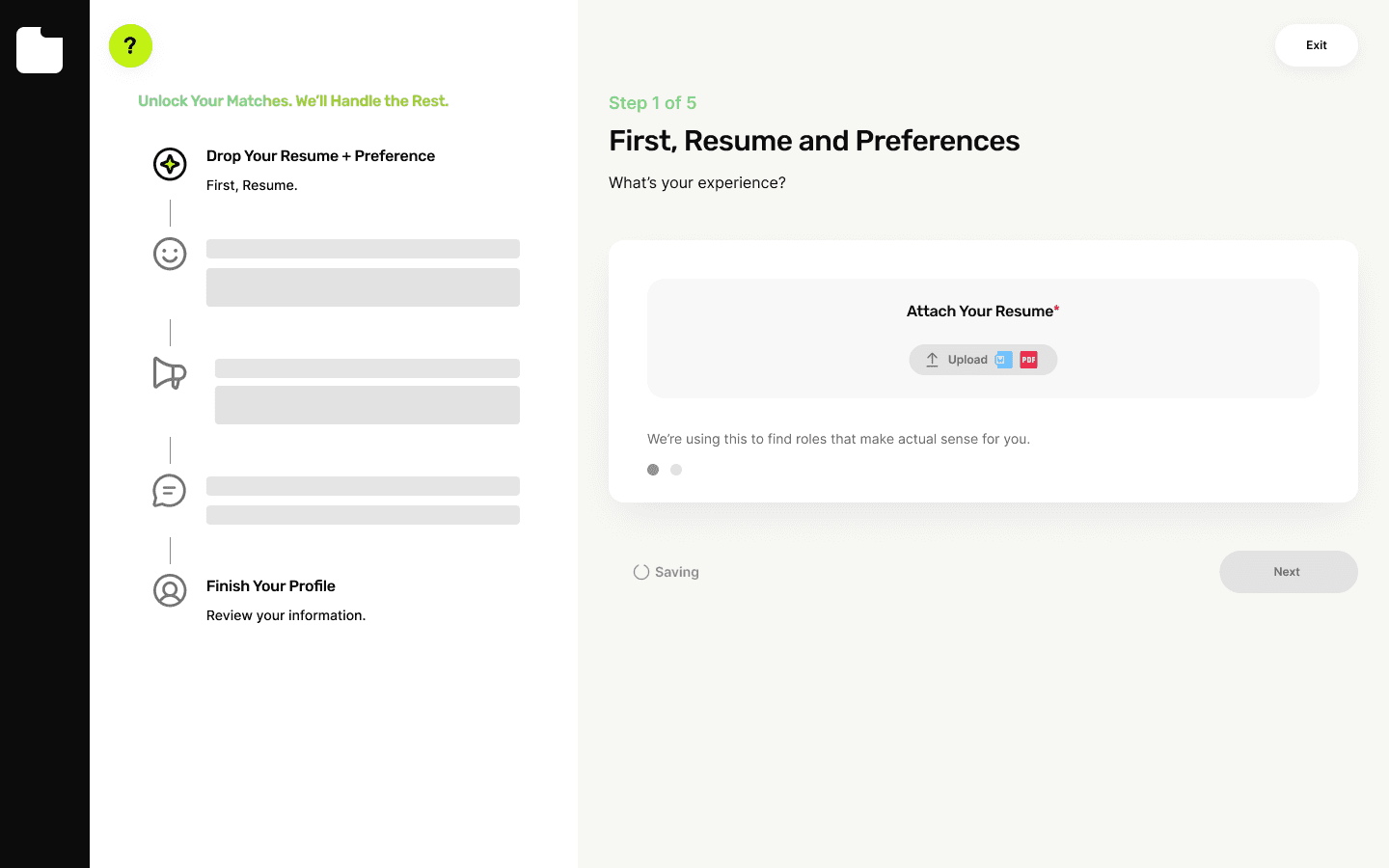
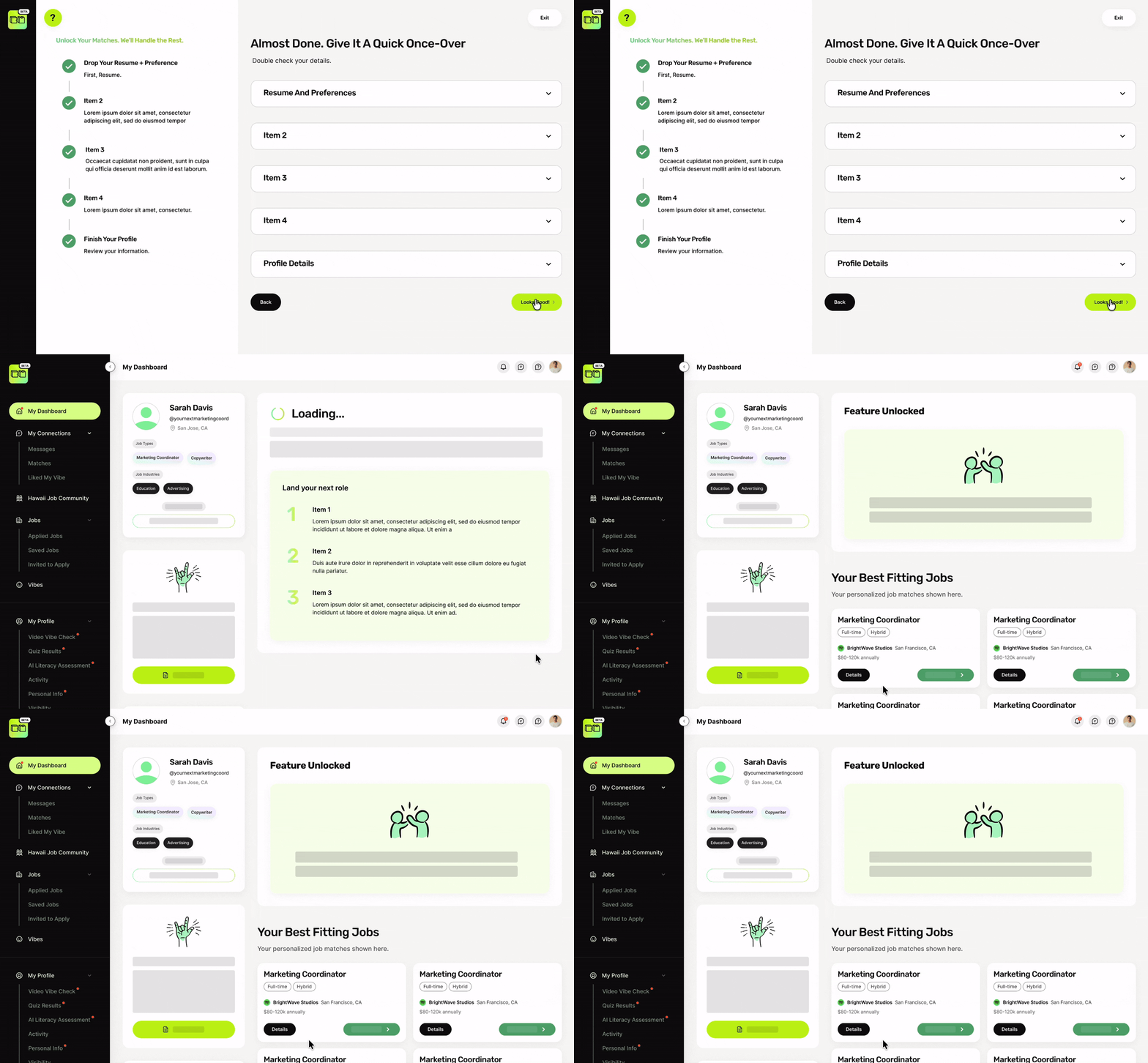
One dashboard with a click-to-open checklist: completing items filled in the blanks on the dashboard like a puzzle. Gamified, accessible, nudge-not-force.
REWORKED — BUSINESS VALUE:the progress mechanic didn’t pull users in.
Onboarding · Activation · Shipped 2025
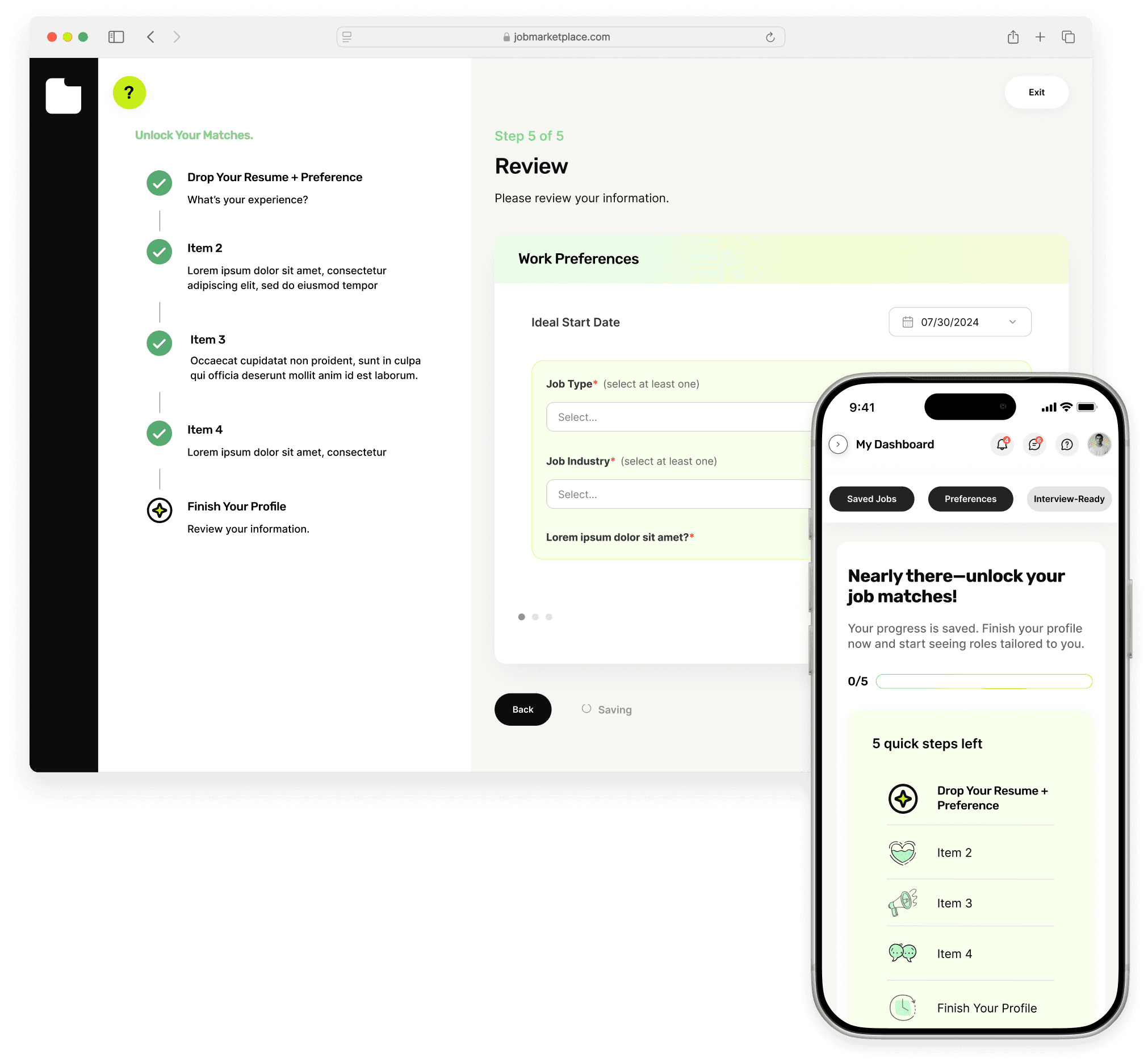
I designed and shipped the onboarding for a job marketplace. The shipped flow gathers what the business needs without forcing anyone: see the why, fill it at your own pace, browse jobs in the meantime, and unlock personalized matches when you're done. 3 hi-fi versions.
Launched ~1 year
↓ drop-off through onboarding
↓ time to first job application
↑ completion of required questions
ROLE
Product Designer
2025
3 months
Iterations
3 hi-fi versions
scope
Onboarding · dashboard · feature unlock
Sole designer. I owned design strategy and execution, working directly with the CEO+PM (business priorities) and 1 engineer (build). Strict timeline and no user research budget: I designed on business logic and product reasoning.

A job marketplace needs profile data to make good matches. But new users want one thing first: to see jobs. The old flow forced everyone to complete profile data upfront during sign-up, and only the most urgent job-seekers pushed through it.
My job: get people to share what we needed without forcing them and make it worth their while enough that the casual browsers complete it too.
(I'd earlier designed this platform's sign-up flow, so I knew exactly where it was losing people before taking on onboarding.)
Each version was reworked for a specific business or technical reason; each one moved closer to the version that shipped.
The theme: payoff first, data second — each version pushed the reward earlier and the cost lower.
The call I'm proudest of
Exit the questionnaire anytime; progress saves to a dashboard widget — visible, so it pulls you back.

Completing the modal runs matching and unlocks personalized matches + the new feature.

Feature unlocks, user gets new tool to simplify job search: I designed it end-to-end.

• 35% fewer drop-offs through onboarding after launch.
• 40% faster time to a user's first job application.
• 32% more users completing the required questions.
The jump came from who completed it: the old forced sign-up only converted urgent job-seekers. A value-first, reward-based flow pulled in both user types: casual and urgent job-seekers.
My first project owned solo: CEO, PM, and engineers, all mine to align.
I stopped waiting for direction and started setting it.
The biggest shift wasn't in my design skills; it was learning to take charge: to explain the why behind a decision, defend it under pressure, and push back when I thought it doesn't align with user goals.